



You need an account to access this content
Create a free account and get access to all downloads and more!

Whitepaper

2 Mar 2026
5 min read
Whitepaper originally published on datacenterfrontier.com.
In today’s data-driven world, datacentres face unprecedented demand from AI and the wider growth of digital services, with energy needs rising rapidly. Meeting sustainability targets without compromising availability demands a practical approach that prioritises on-site generation, storage and intelligent control, supported by smart procurement.
This whitepaper explores how hybrid systems built around photovoltaics (PV), battery energy storage systems (BESS), low-carbon fuels such as HVO, and brand-agnostic controls can cut emissions, improve efficiency and strengthen on-site resilience. It also outlines the complementary role of green PPAs across multiple sites and for price stability.
Drawing on ComAp’s experience in standardised, flexible control architecture, we show how to integrate diverse assets, control and monitor these assets, and optimise to use the most sustainable and cost-effective power at your site.
Cloud adoption and AI workloads are expanding the baseload demand of datacentres. To address this, operators must reduce Scope 1 and 2 emissions without compromising site availability. Traditional diesel-only strategies face growing regulatory pressure and criticism.
Decarbonisation plans therefore pair portfolio instruments such as PPAs with physical assets that directly affect the energy used every hour at the rack.
A Green PPA is a long-term contract with a renewable generator, typically solar or wind. Physical PPAs (on-site or off-site) deliver electricity via private wire or the public grid, while virtual PPAs are financial contracts, often structured as a contract for difference. The appeal is clear: credible Scope 2 (market-based) reductions, long-term price visibility, and no capital outlay or operational burden for new assets. Where PPAs enable new renewable capacity, they support additionality and broader grid decarbonisation.
The limitations to this are practical rather than ideological. For example, renewable output may be produced far from the datacentre and at times that do not match load. Real-time carbon intensity at the facility can therefore diverge from the profile of the contracted project. Furthermore, transmission constraints and curtailment risk can erode impact.
PPAs are powerful portfolio tools, but they do not optimise the efficiency or resilience of a specific site.
Modern facilities can integrate PV and BESS in a hybrid microgrid alongside multiple gen-sets and grid connection. Low-carbon fuels such as HVO provide a drop-in alternative to diesel with no engine or controls modification. In suitable contexts, hydrogen-ready pathways may be assessed for future phases. The critical enabler is control and the need for brand-agnostic systems that coordinate inverters, storage, gen-sets, and the grid to follow the load, minimise emissions, and protect uptime.
With intelligent control, PV output reduces genset loading throughout the day while maintaining safe operating limits. BESS smooths short-term variability and supports seamless transitions. Local generation and storage reduce losses associated with distance and conversion. Measured at the boundary of the facility, these choices translate into tangible reductions in fuel use and operational emissions, with reliability maintained or improved.
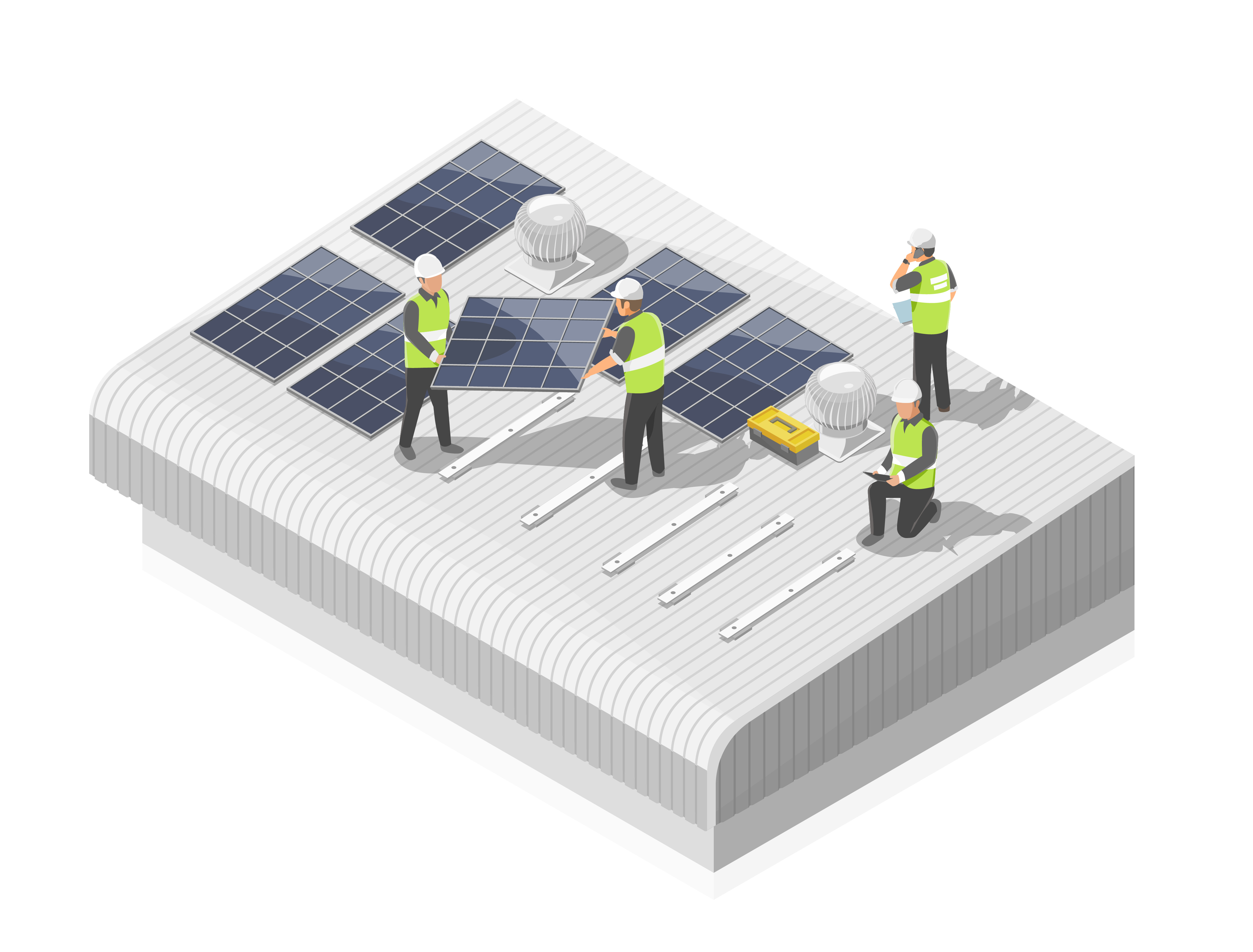
Begin with an energy and carbon baseline, including high-resolution load profiles, grid carbon-intensity mapping, and diesel runtime analysis. In parallel, audit existing gensets, UPS and BESS, and inverter mix, then plan brand-agnostic integration. Deploy PV and BESS to match site constraints and load shape, and introduce HVO for backup or prime where feasible to cut Scope 1 emissions immediately. Implement master controls that prioritise lowest-cost, lowest-carbon dispatch while safeguarding uptime. Connect assets to a single supervisory platform for alarms, performance trends, fuel levels, and audit-ready reporting. Alongside on-site measures, define a PPA strategy that complements renewable generation, providing long-term price stability and additional renewable capacity where needed. Over time, refine PPAs for better time-matching, consider on-site expansions, and develop grid-interactive capabilities such as demand response.
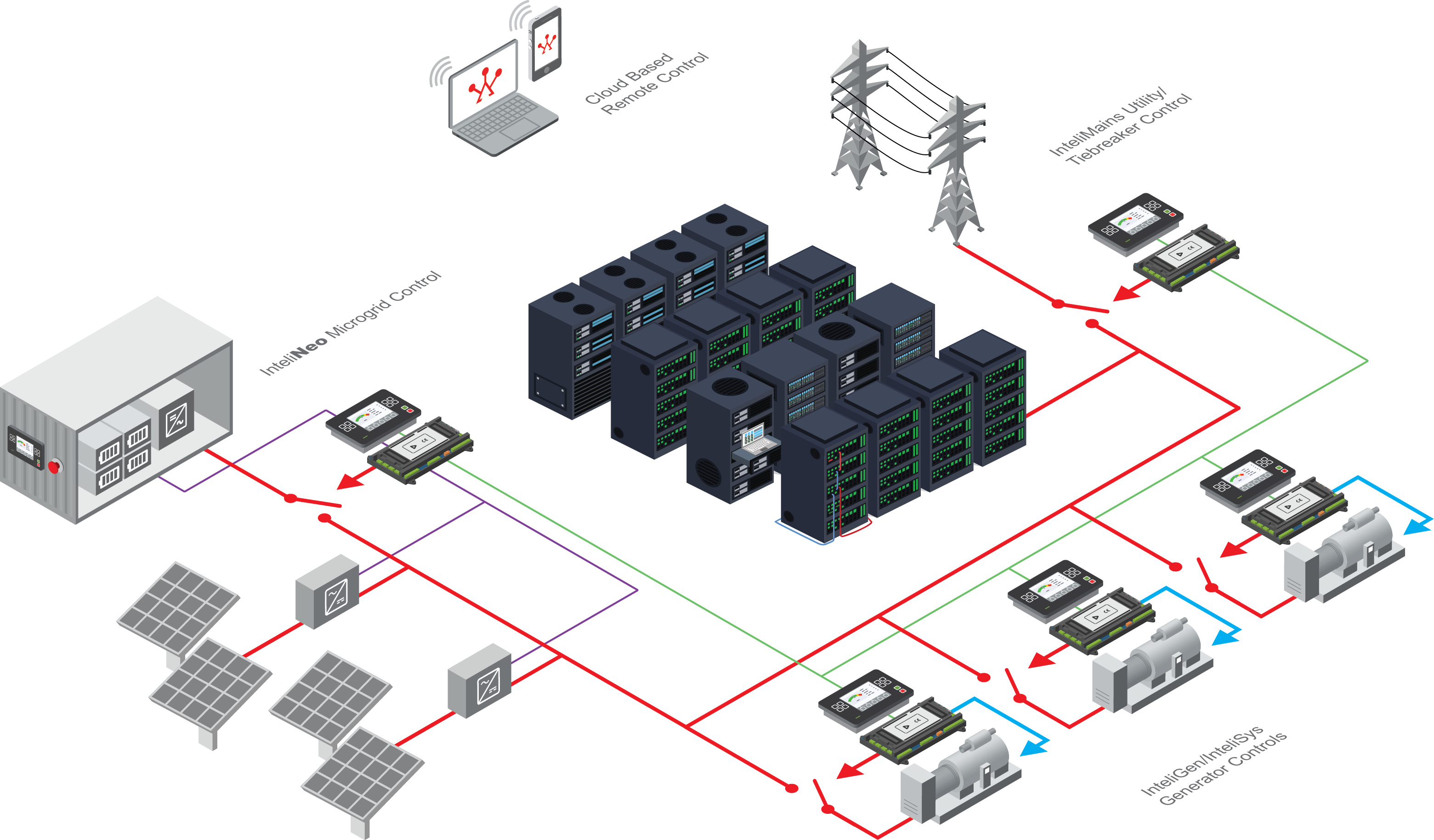
ComAp provides the control architecture that facilitates the integration and cooperation of different power sources and brands within a site. Our solutions are inverter- and gen-set-agnostic, allowing a genuine mix-and-match approach.
The InteliNeo controllers manage battery energy storage systems and hybrid applications; InteliGen controllers coordinate gen-sets for reliable, economic dispatch while InteliMains controllers taking care of the utility side.
ComAp's cloud-based system WebSupervisor can be used for a unified operational view, with trend reporting that simplifies sustainability disclosure. A built-in PLC interpreter lets operators encode priorities, whether cost, carbon, or resilience, and automate responses to load, weather, and signals from the grid.
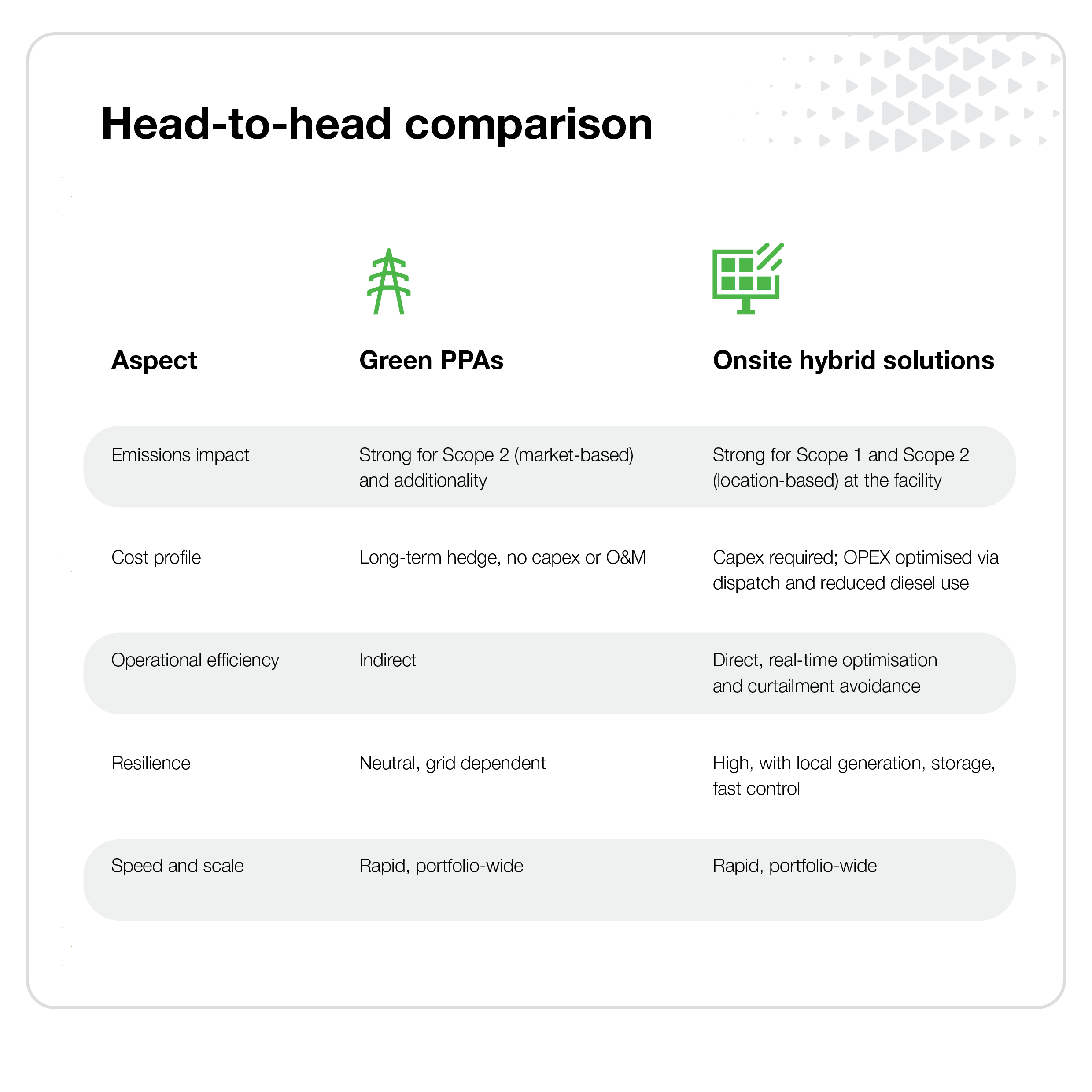
On-site hybrid systems and PPAs both support the decarbonisation of datacentre operations but in different ways. PPAs enable large-scale renewable development and long-term price stability, helping companies expand their clean energy portfolios. On-site generation, storage, and intelligent control deliver immediate, measurable reductions in emissions and energy costs while enhancing reliability and flexibility.
By combining both approaches, operators can benefit from clean energy at scale through PPAs while leveraging on-site renewables to optimise performance in real time. This integrated strategy not only supports sustainability targets but also strengthens energy independence, reduces reliance on the grid, and ensures datacentres remain efficient, resilient, and future-ready.
Looking to strengthen resilience and reduce emissions in your datacentre? Find out more about ComAp's solutions for datacentres here.
-off-grid.jpg?f=Avif&w=600&h=440&t=34&l=0&cw=4032&ch=2956&q=70&v=639070169905393967)


.jpg?f=Avif&w=600&h=440&t=48&l=0&cw=5712&ch=4188&q=70&v=639033106938047093)


